How VeriStay Identifies Short-Term Rentals to an Exact Address
From an anonymous Airbnb or Vrbo listing to an identified parcel, compliance determination, and actionable municipal record
The Challenge: A Listing Is Not an Address
Municipalities regulating short-term rentals face a fundamental problem: the rental platforms know exactly where their properties are located, but that information generally isn't publicly displayed to regulators.
A city may know that hundreds or thousands of Airbnb and Vrbo listings are operating within its boundaries while still lacking the information necessary to connect each listing to a physical property.
VeriStay is designed to bridge that gap.
The platform combines automated STR data collection, municipal parcel and registration data, human property identification, automated compliance matching, and secondary review into a single workflow.
The objective is straightforward:
Core Objective
Turn an anonymous online listing into an exact, evidence-supported address and parcel—and determine whether that property is operating within the municipality's STR requirements.
Step 1: STR Listings Are Automatically Collected
For each registered municipality, short-term rental listings are collected through an automated system from major rental platforms such as Airbnb and Vrbo.
The collected information can include data useful to the identification process, such as:
- Listing URL
- Listing title
- Host information
- Listing photographs
- Approximate location information
- Property characteristics
- Other information made available by the rental platform
Rather than requiring municipal staff to manually search rental platforms for properties, listings are collected and organized within VeriStay for investigation.
The identification process begins with the STR inventory already assembled and ready for review.
Step 2: Listings Are Served Directly to an Analyst
Each unidentified listing is presented to an analyst within the VeriStay identification platform.
The analyst is not working from an Airbnb URL alone.
The identification workspace brings together the information necessary to investigate the property, including:
- The original STR listing
- Listing photographs
- Host name
- Listing title and details
- Municipal parcel data
- An interactive parcel map
- Parcel pins/cards containing corresponding property information
- A form for submitting the identified address and parcel
This creates a purpose-built environment for answering a deceptively difficult question:
Where exactly is this rental?
The answer may be obvious in some cases. In others, identifying the property requires combining several pieces of evidence.
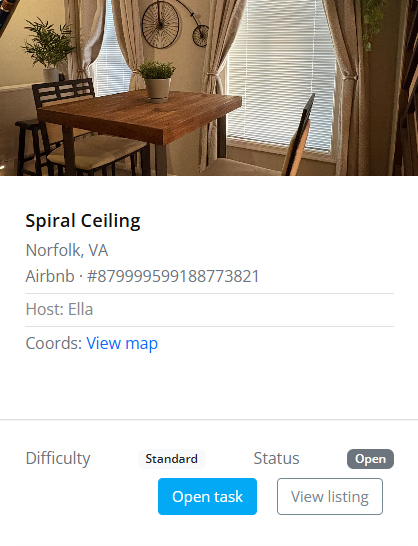
Analyst Solve View (Partial View)
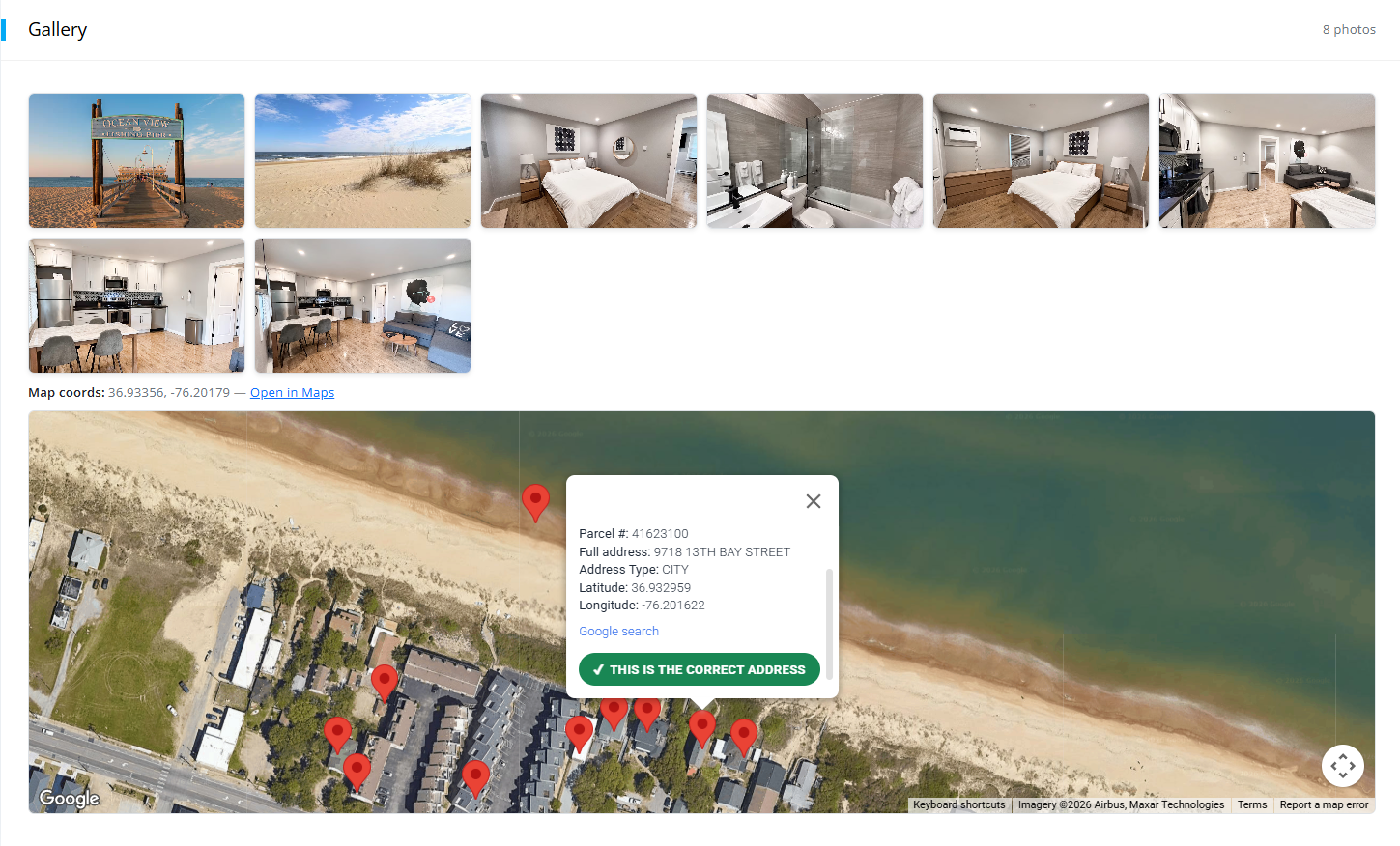
The integrated map helps analysts quickly narrow down potential matches using
actual parcel data provided by the municipality. When a listing is opened,
the map automatically centers on the rental's estimated location and displays nearby parcels
as searchable pins.
For example, suppose an exterior listing photo shows a clearly visible house number.
The analyst can enter that number into the map filter, instantly narrowing the surrounding
parcels to addresses containing that number.
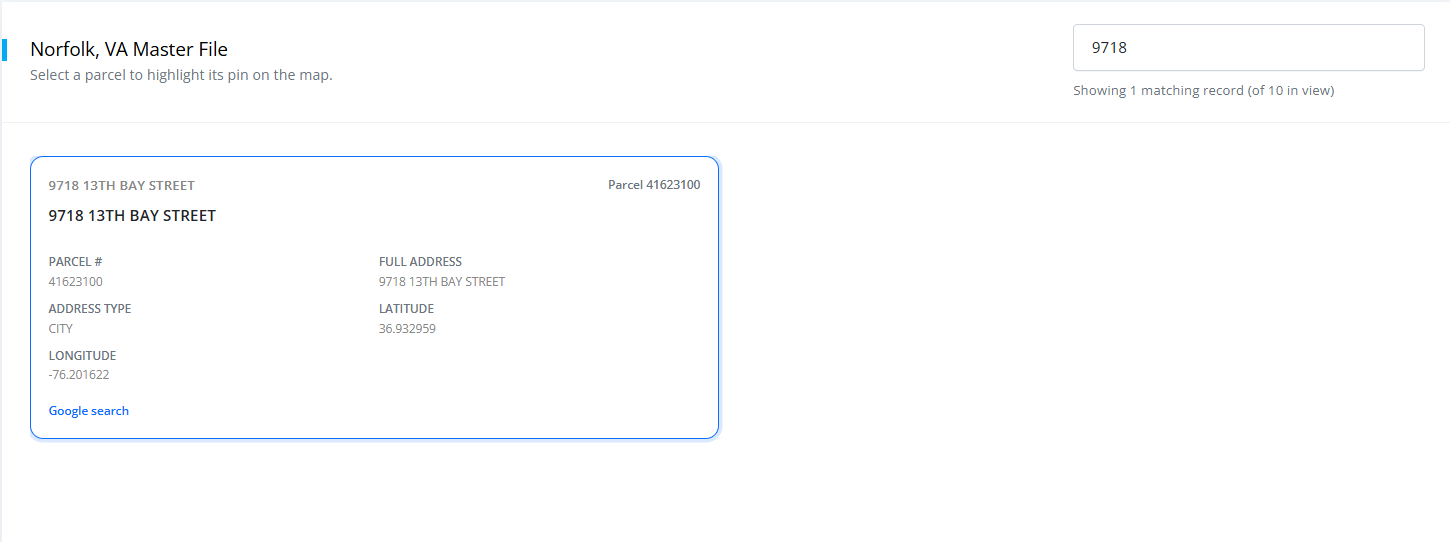 If only one nearby parcel matches, the analyst
now has a strong potential match within the property's probable location.
From there, the address can be independently verified using additional evidence and
identification methods, several of which are described below.
If only one nearby parcel matches, the analyst
now has a strong potential match within the property's probable location.
From there, the address can be independently verified using additional evidence and
identification methods, several of which are described below.
Step 3: The Analyst Chooses the Best Identification Method
There is no single technique used to identify every STR.
The method depends entirely on the evidence available for that particular listing.
A single-family home with clear exterior photographs may be approached very differently from a condominium with only interior photographs.
The analyst evaluates what the listing provides and chooses the most effective path to establishing the property's location.
Example: Matching a Single-Family Home Through Realty Imagery
Consider an Airbnb listing that appears to show an entire single-family home.
If the listing contains a clear exterior photograph, one of the simplest starting points may be a reverse-image search.
That image may lead to a real-estate listing or other public property source where photographs of the same house are associated with an actual street address.
The analyst can then compare the STR imagery against the property imagery.
What began as an anonymous rental listing can potentially be reduced to a specific property in minutes.
STR photograph → matching real-estate photograph → exact address → municipal parcel
The resulting address can then be checked against the municipality's parcel data already available within VeriStay.
Airbnb Listing — Exterior Photo
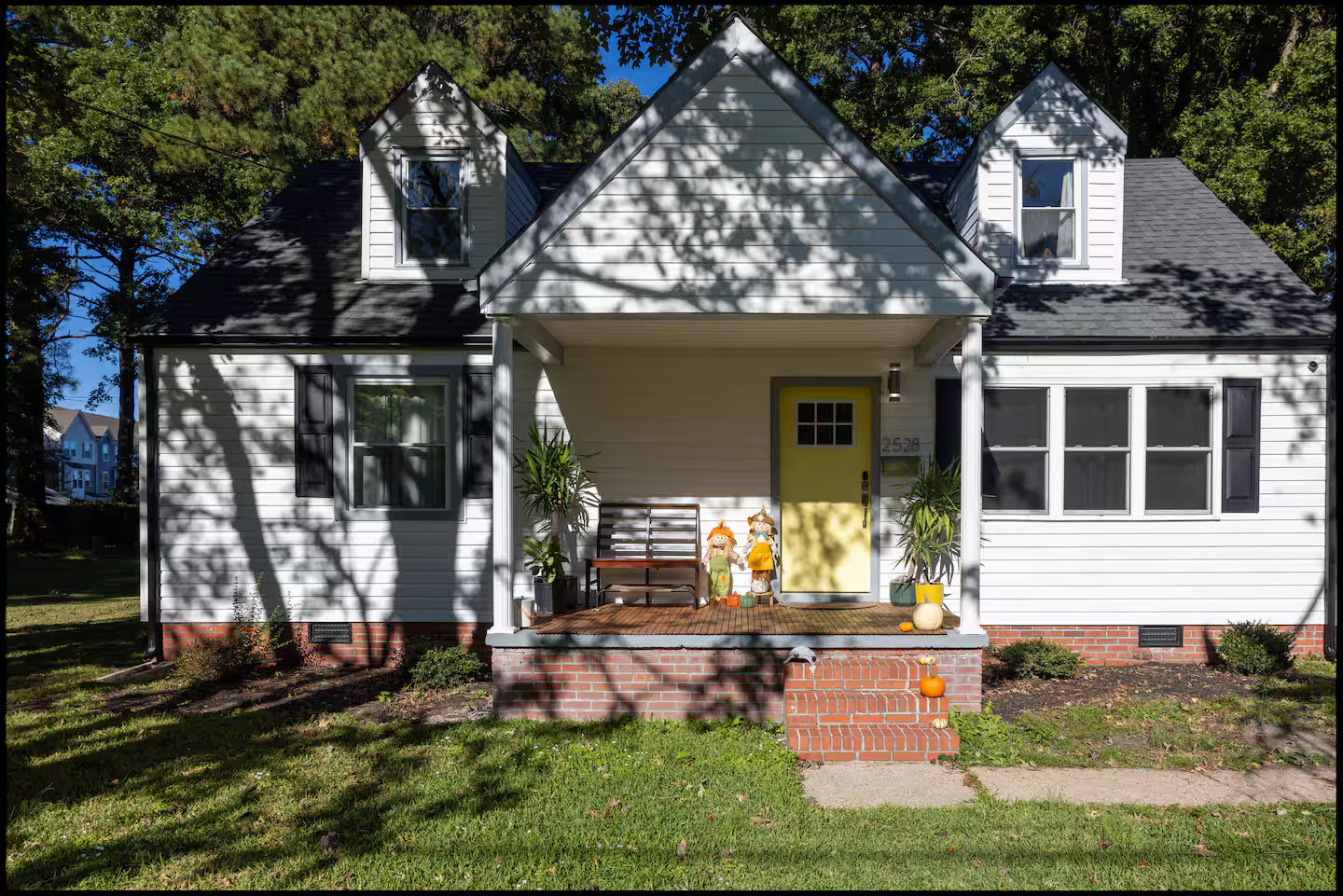
Realty Listing From movoto.com — Matching Exterior & Identified Address
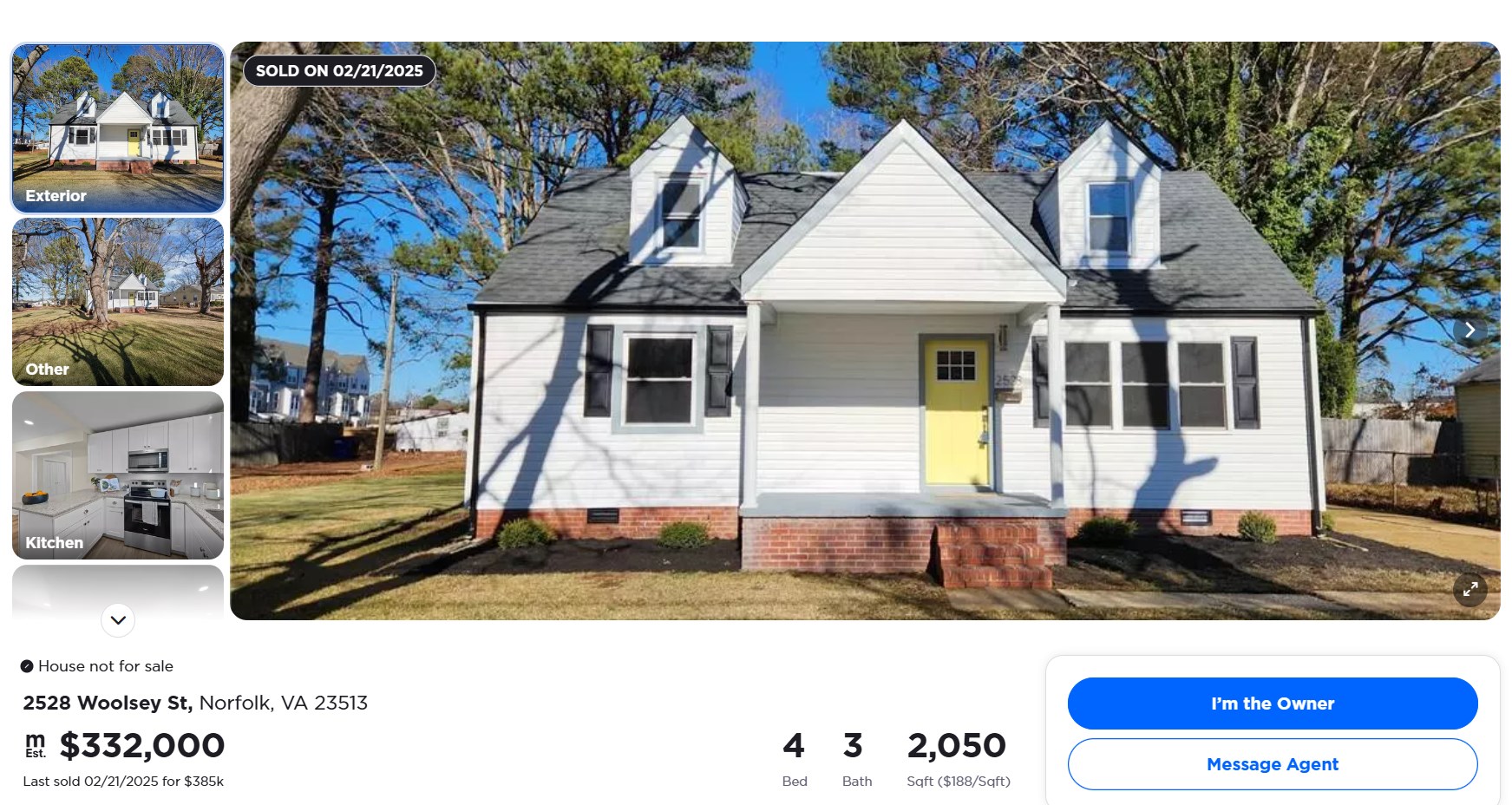
https://www.movoto.com/norfolk-va/2528-woolsey-st-norfolk-va-23513/pid_r0cn5ppaph/
Example: Matching a Property From Satellite Imagery
Satellite imagery can provide another powerful means of identifying detached homes.
If the approximate location is known and imagery is sufficiently clear, an analyst may compare characteristics visible in the STR listing against properties within that area.
Useful characteristics can include:
- Roof shape and rooflines
- Swimming-pool shape
- Driveway design
- Building footprint
- Decks and patios
- Detached structures
- Landscaping
- Tree placement
- Lot configuration
- Other distinctive physical features
A uniquely shaped pool, unusual roof configuration, curved driveway, and particular arrangement of surrounding structures can collectively distinguish one parcel from every other candidate in the area.
The analyst can compare these characteristics directly against the parcel map and available imagery until the evidence supports an exact property.
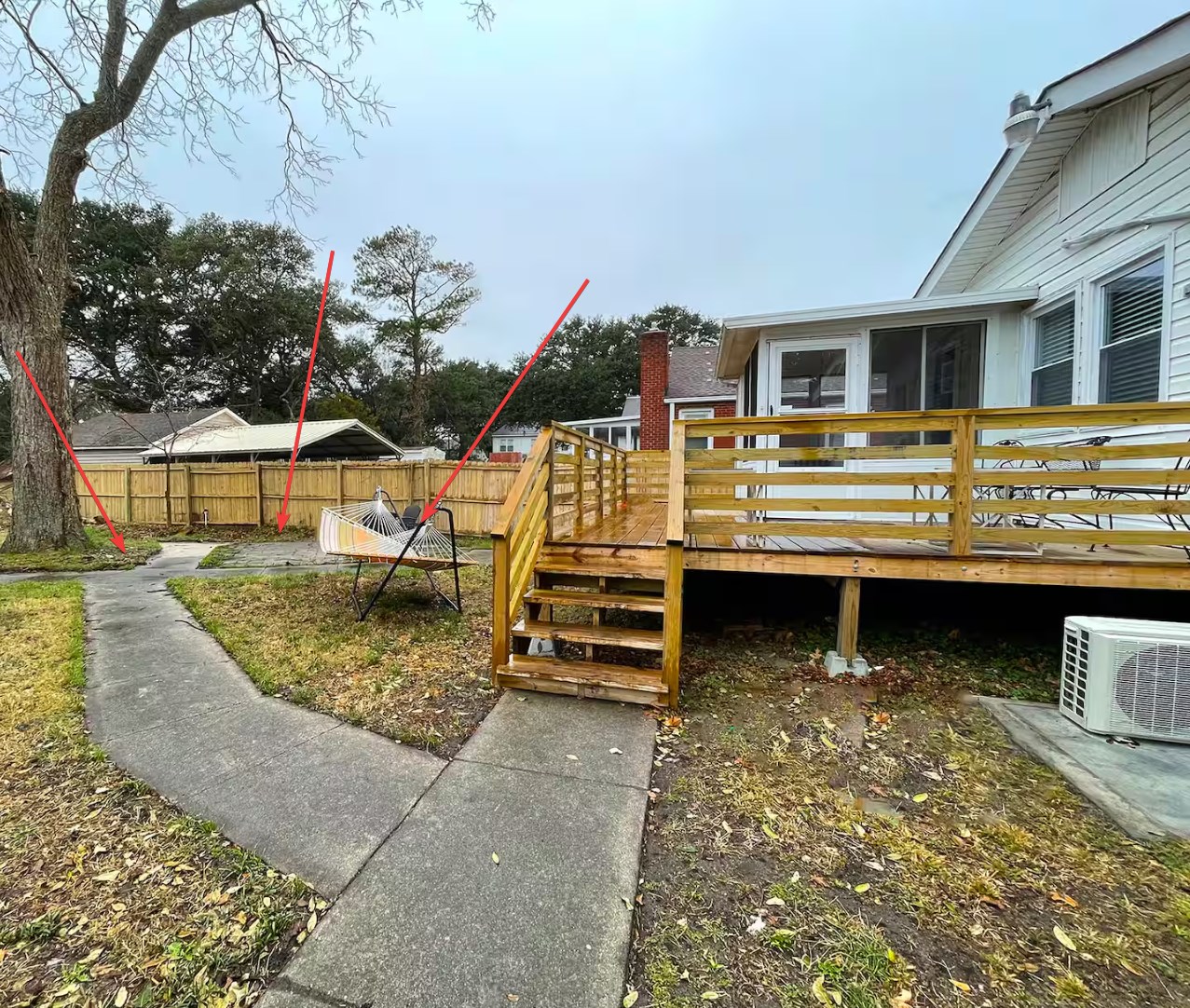
Backyard Photo Provided by Host on Airbnb
Google Maps Imagery of the Same Property
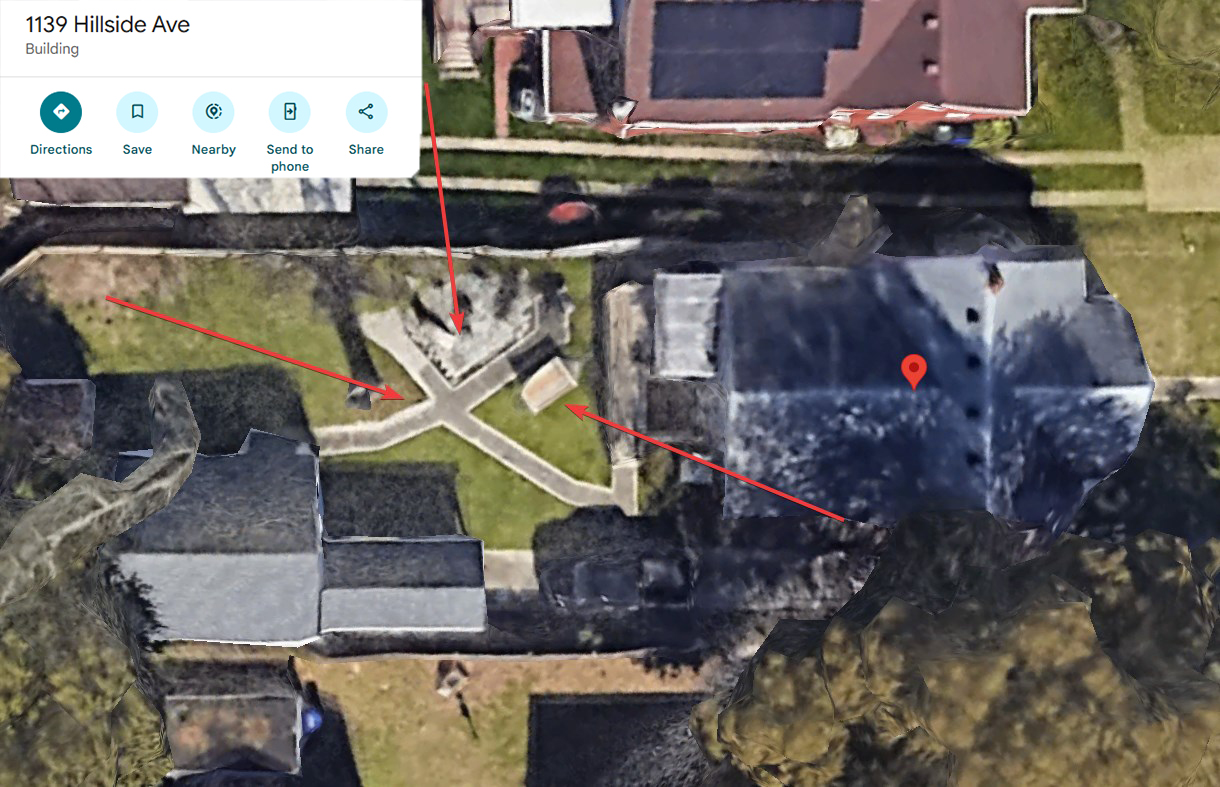
In the example above, several unique elements visible in the host-provided backyard photo can be matched to corresponding satellite imagery from Google Maps, including an intersecting walking path, a distinctive patch of weathered stonework, and a hammock.
Identification Can Go All the Way to an Exact Unit
Multifamily properties present a different challenge.
Identifying the correct apartment or condominium building may not be enough.
A building could contain dozens or hundreds of individual units, while only one is represented by the STR listing.
VeriStay investigations can sometimes go significantly further and identify the exact unit being rented.
Even when units share nearly identical layouts, photographs can contain physical characteristics that are effectively unique.
Examples include:
- Unique wood grain
- Natural stone patterns
- Fireplace stonework
- Flooring patterns
- Countertop veining
- Views and window positions
- Permanent fixtures
- Other individually distinguishable characteristics
Natural materials can effectively function as fingerprints.
Two condominium units may have the same floor plan, same cabinets, same appliances, and same fireplace design—but the grain of a particular piece of wood or the natural pattern of individual stones can be unique.
If unit-specific property imagery exists, those characteristics can sometimes establish that an STR photograph and a photograph associated with a particular unit depict the same physical interior.
This means that even in a building filled with visually similar units, a listing may still be identifiable to a specific unit.
Interior Provided by Host on Airbnb
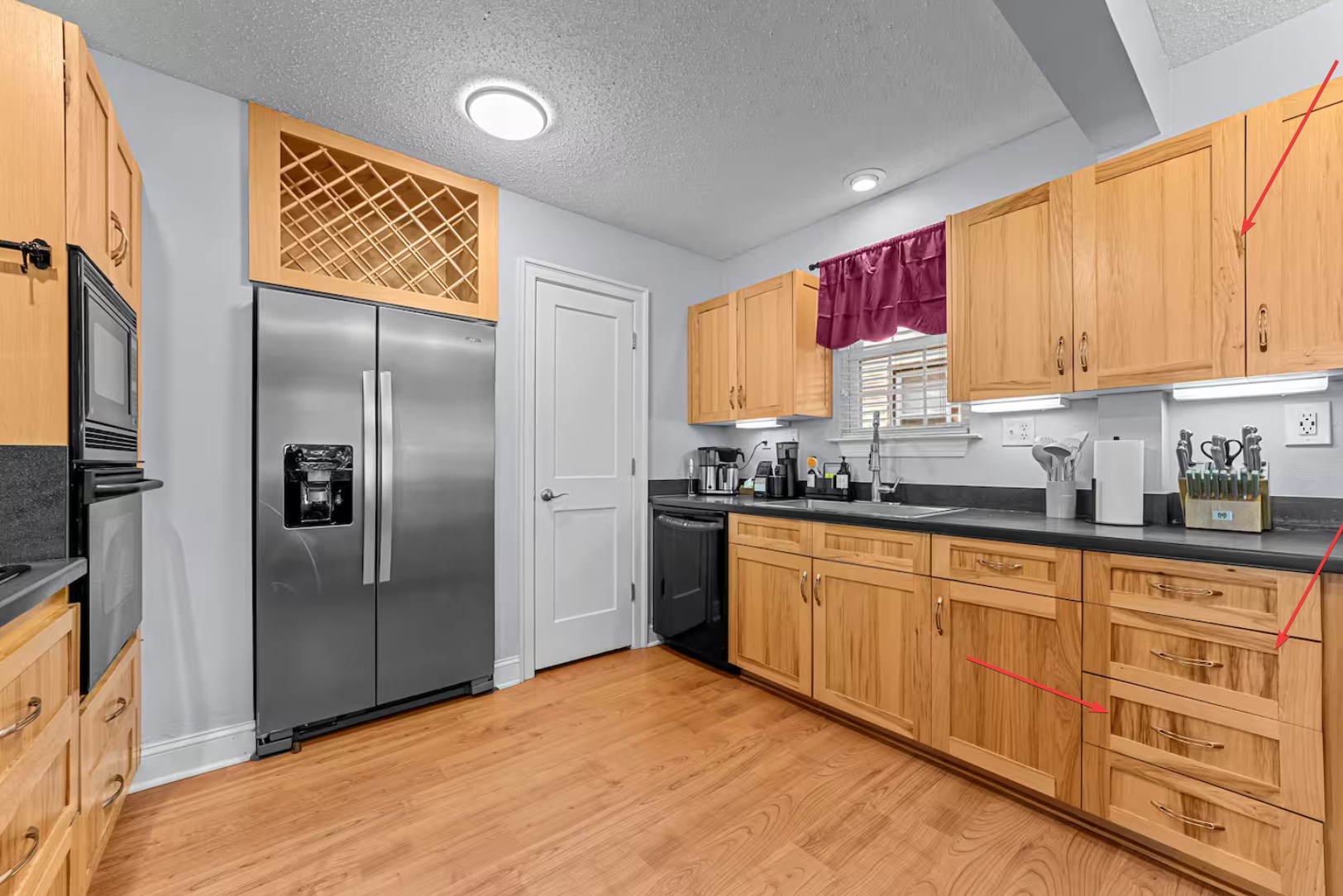
Zillow.com Imagery of the Same Property
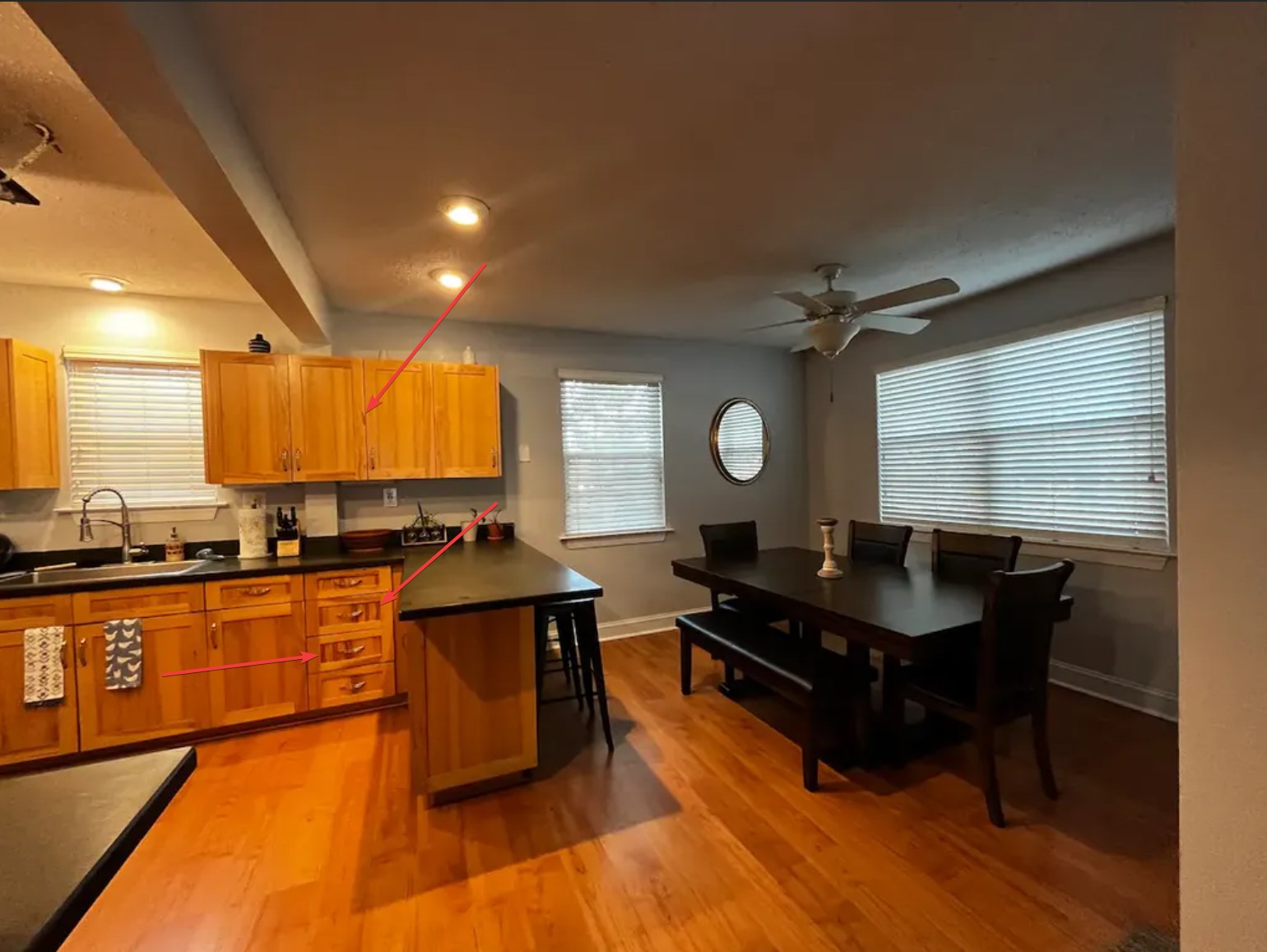
In the example above, several unique wood-grain patterns visible in the host-provided interior photos can be matched to corresponding cabinetry shown in photos from a real estate listing, providing a strong visual match between the two properties.
There Is No Single Identification Formula
These examples represent only some of the techniques available to an analyst.
Listings vary enormously in the information they expose, and many additional methods of proving an exact address are available depending on the property and evidence.
The important distinction is that VeriStay does not rely on one matching technique.
Instead, analysts use the evidence available for each individual listing to determine the strongest method of identification.
The goal is not to generate a probable address. The goal is to establish an address that can be supported by evidence.
Step 4: The Identification and Supporting Evidence Are Submitted
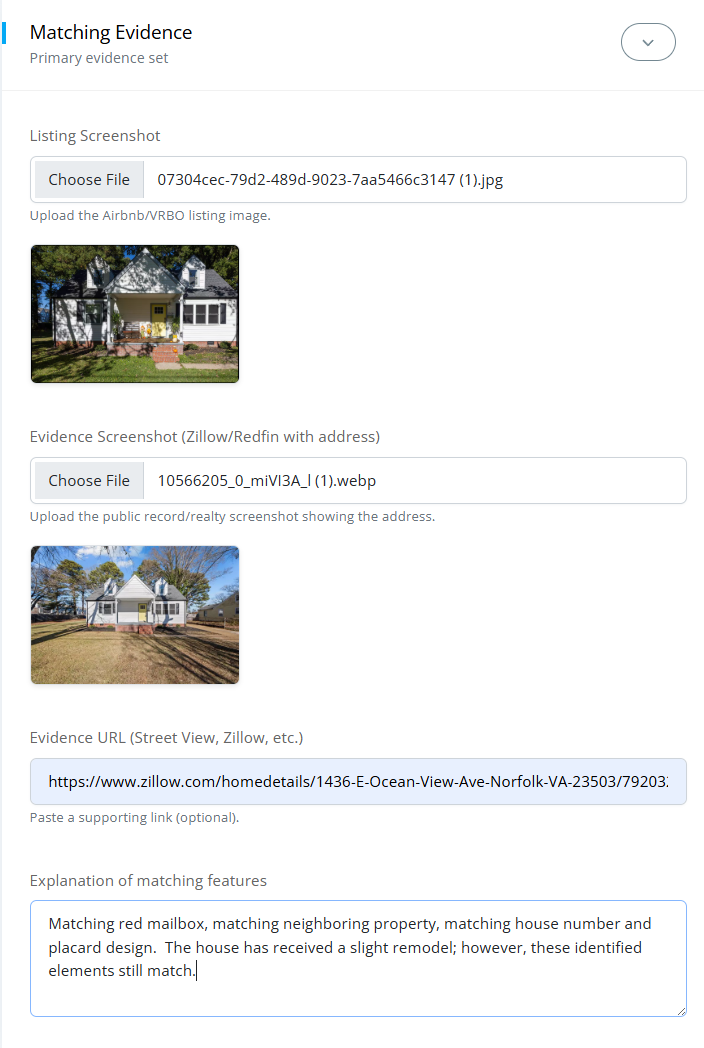
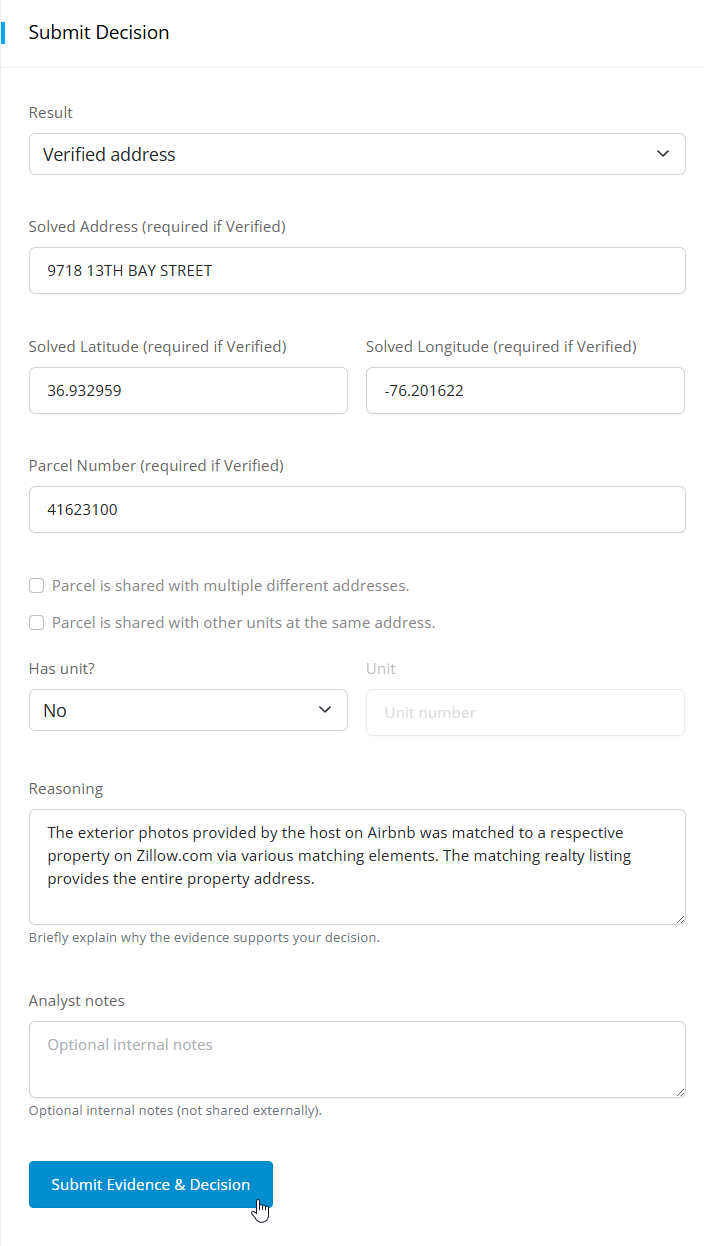
Once the analyst has identified the property, they submit a complete identification record through VeriStay rather than simply entering an address.
The submission includes the identified address, parcel information, and geographic coordinates, along with the supporting evidence used to verify the match.
Analysts also submit photo evidence comparing the short-term rental listing with the identified property. When necessary, images can be annotated to highlight matching features or other distinctive characteristics used to establish the match.
A link to the external source used as evidence is also included when applicable. This may be a property assessor record, real estate listing, GIS record, mapping service, or another source that independently provides or corroborates the property's address, coordinates, parcel information, or identifying characteristics.
Together, these materials create a reviewable evidence trail supporting the identification, rather than relying solely on an analyst's submitted address.
The municipality's registered short-term rental records have already been provided to VeriStay, allowing the identified property to be automatically checked against the municipality's existing STR database.
This allows property identification, evidence collection, and initial compliance screening to occur within the same workflow.
Evidence Submission
Note: The information shown in the fields below is for demonstration purposes only and does not correspond to an actual property or address being identified.
Evidence Submission, continued
Step 5: Registered Properties Can Be Automatically Matched
If the identified address or parcel matches an existing municipal STR registration, the system can recognize that association automatically.
The listing is not merely marked:
Solved
It can also be classified:
Compliant
The municipality now has a connection between:
Online Listing → Exact Property → Parcel → Existing STR Registration
This eliminates the need for an analyst to manually search the municipal registry every time an address is identified.
Step 6: Listings Without a Match Are Reviewed Before Being Classified
An unsuccessful automatic registry match does not immediately mean that a property is unlicensed. It means the listing requires a second verification stage.
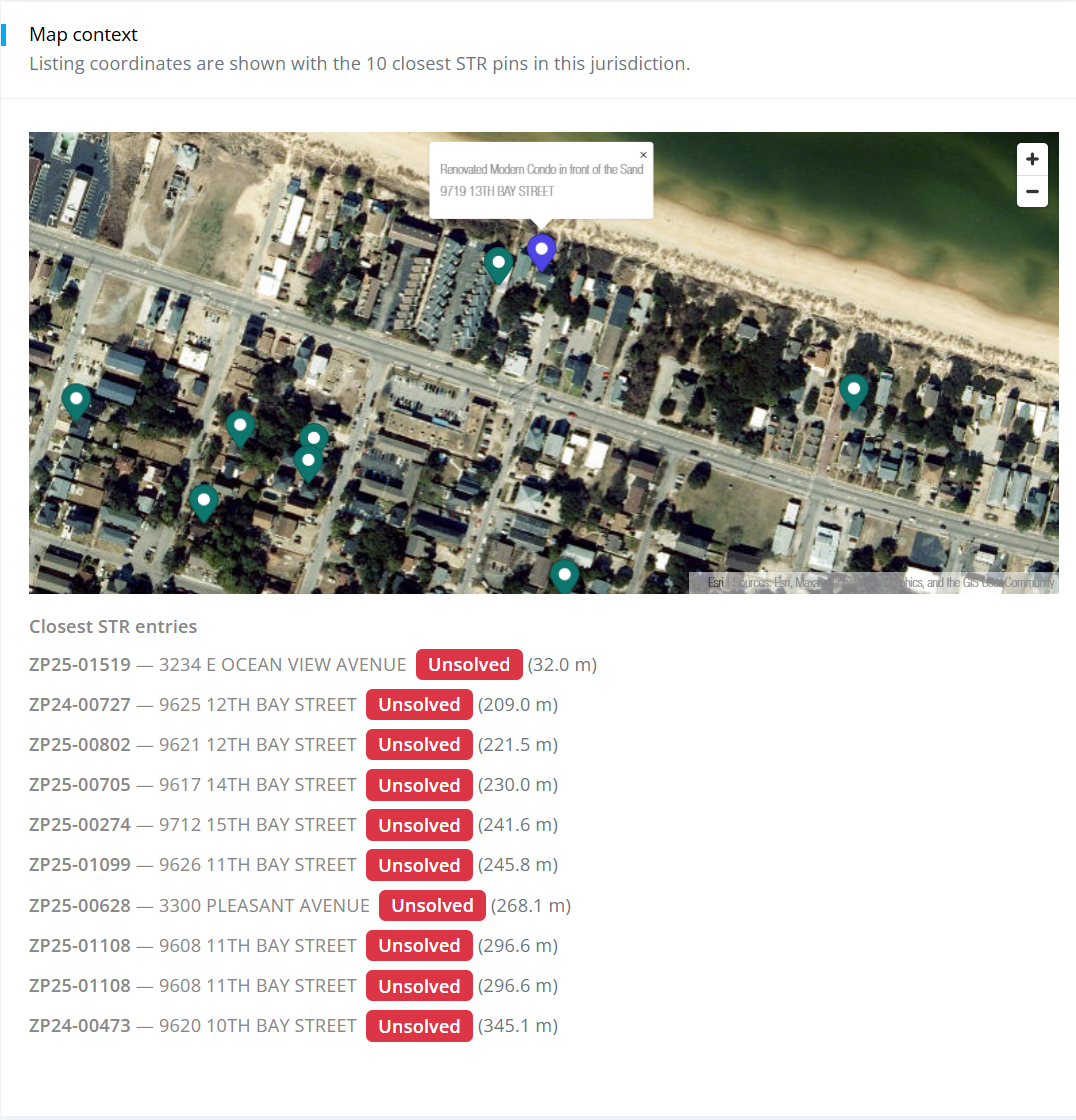
Listings without a direct match enter VeriStay's Unlicensed Review Queue, where a reviewer can examine nearby registered rentals, address variations, unit discrepancies, parcel relationships, and other possible associations.
The review interface can surface information such as the number of registered STRs sharing the same house number and an interactive map of registered rentals near the identified property.
This allows the reviewer to determine whether:
- A registration uses a slightly different address or unit format
- A nearby or related parcel explains the listing
- A multifamily property contains a registered unit that corresponds to the STR
- Another plausible registration can be connected to the identified property
A failed automatic match triggers investigation—not an automatic finding of noncompliance.
If a valid association is found, the listing is connected to the appropriate registration. If no plausible registered match remains after review, the listing is classified as unlicensed.
This preserves an important separation in the workflow: identifying where an STR is located and determining whether it is properly registered are two distinct decisions.
Review Queue
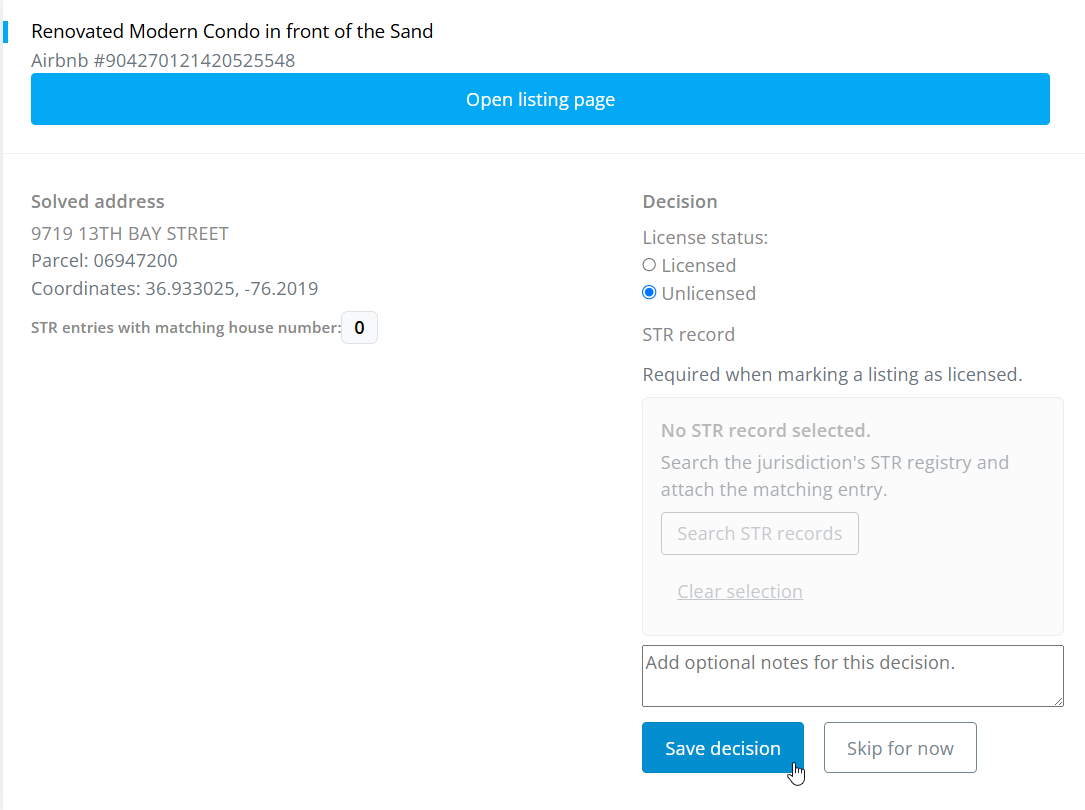
Review Queue Map With Relevant Pins
Step 7: Confirmed Unlicensed Listings Are Analyzed for Historical Activity
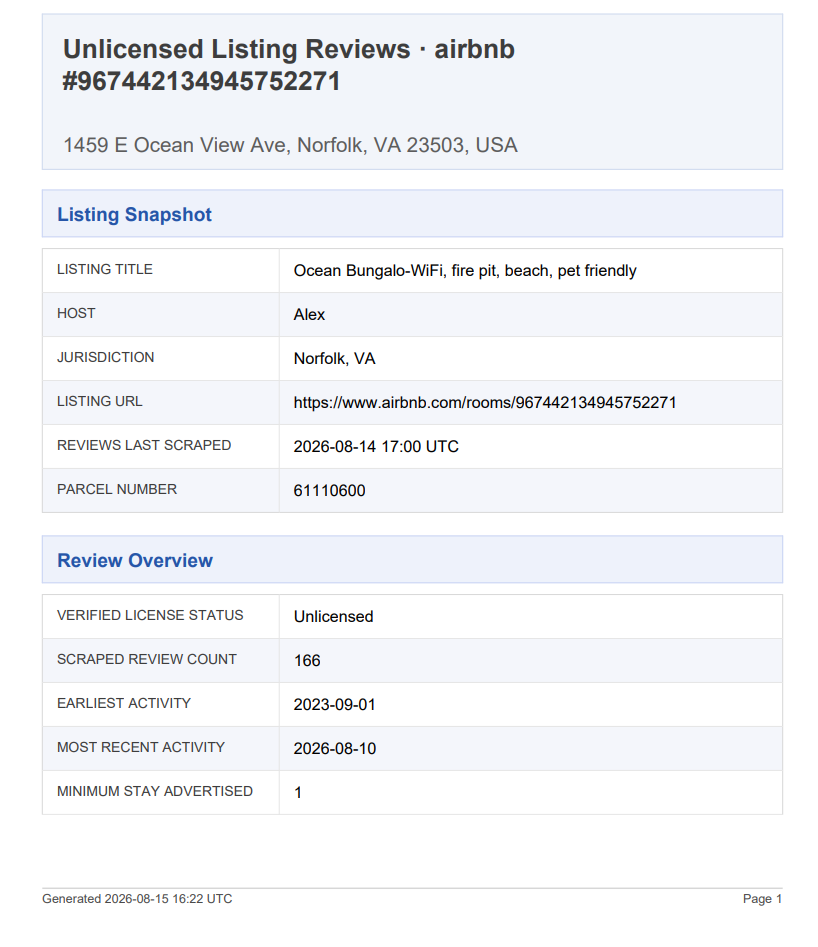
Once a property has been confirmed as unlicensed, VeriStay can return to the original rental platform and collect available historical activity information.
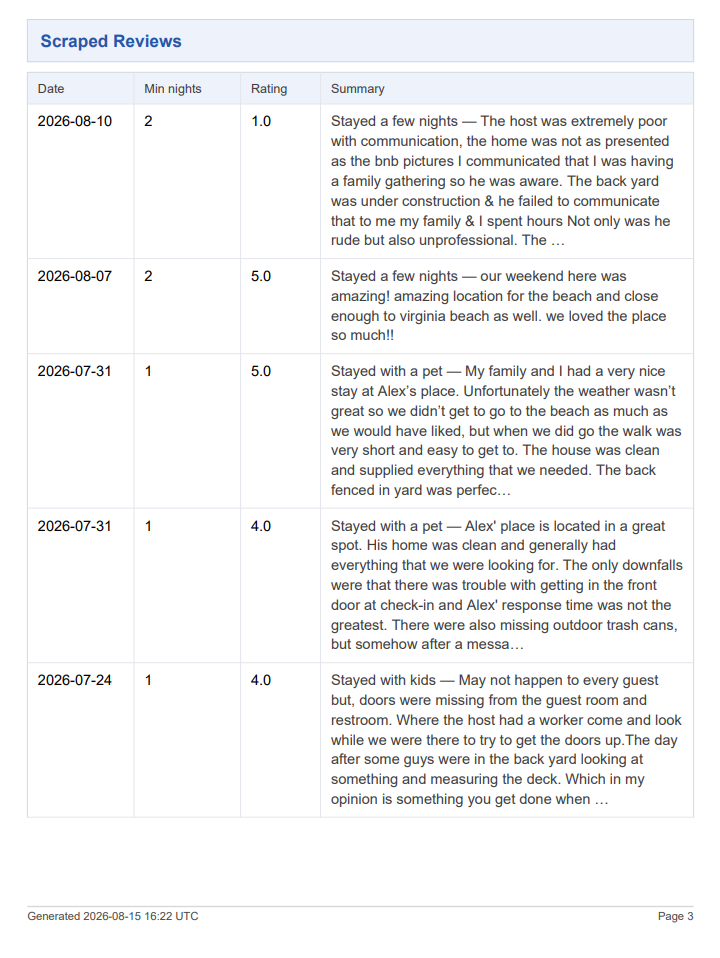
Guest reviews are particularly valuable because they can document actual past rental activity—not merely that a property is currently advertised.
Available review data can help establish:
- Earliest verified guest stay
- Most recent documented activity
- Total unique guest reviews
- An estimate of documented stays based on unique guest reviews
A listing discovered today may have been operating for months or years. The earliest available review can help establish how far back documented activity extends, while unique guest reviews provide a conservative indication of completed stays because not every stay necessarily results in an available review.
Historical Activity Example
75 unique guest reviews can document at least 75 individual stays associated with the listing.
The actual number of stays may be greater. This history can be especially useful where duration or frequency of unlicensed operation affects back fees, taxes, penalties, or other enforcement decisions.
Unlicensed Listing Report
Note: The report view is currently undergoing a redesign. The version shown below is for demonstration purposes only and does not represent the final report design.
Unlicensed Listing Reviews
Step 8: The Municipality Receives Actionable Data
At the end of the process, the municipality is no longer looking at an anonymous Airbnb or Vrbo listing.
It can receive a structured record containing information such as:
| Data | Result |
| STR listing | Collected |
| Exact address | Identified |
| Parcel | Identified |
| Exact unit | Identified when evidence permits |
| Registration status | Automatically checked + reviewed when necessary |
| Supporting identification evidence | Preserved |
| Earliest documented stay | Collected when available |
| Review history | Collected when available |
| Documented unique stays | Calculated when available |
The municipality can access and export its VeriStay data in the format that best fits its existing workflow, including API integrations, CSV/Excel exports, GIS-ready datasets, downloadable PDF evidence reports, and scheduled reports.
From Identification to Enforcement
VeriStay identifies and organizes the information.
The municipality determines what happens next.
Depending on its own ordinances, regulations, fee structures, and enforcement authority, a municipality may use confirmed unlicensed STR data to:
- Contact operators and bring properties into compliance
- Collect registration or licensing fees
- Pursue applicable back fees
- Review lodging or occupancy tax compliance
- Issue notices of violation
- Assess applicable civil penalties
- Conduct additional investigations
- Update its STR registry
- Prioritize enforcement resources
VeriStay does not need to determine what penalty a municipality should impose.
Instead, it provides the municipality with the information necessary to apply its own rules to properties that previously could not be connected to a physical address.
The Complete VeriStay Workflow
In practical terms, the process moves through one continuous chain:
Collect → Investigate → Identify → Match → Review → Confirm → Document → Export
Each stage builds on the one before it, moving the municipality from an anonymous online listing to a verified property record with supporting evidence, registration status, and—when available—documented historical activity.
More Than Address Identification
Finding the address is the critical first step, but the municipal value comes from what can be connected to that identification: the parcel, registration status, supporting evidence, and available history of rental activity.
VeriStay turns an STR listing into a property, the property into a compliance determination, and that determination into data a municipality can actually act on.
Instead of requiring municipal staff to perform each part of that process separately, VeriStay brings the investigation, verification, compliance review, and resulting data together in a single purpose-built workflow.